> Home > What to visit > Churches and Monasteries

Cattedrale di Santa Maria Assunta Siena
CHURCHES AND MONASTERIES

PHONE NUMBERS AND TIMES
Cattedrale di Santa Maria Assunta
Piazza Duomo
Telephone 0577 47321
Website: http://www.operaduomo.siena.it/
Business card (vCard)
ORARI DI APERTURA E VISITA:
From 01/11 to 28/02: 7.30 - 18.30 and From 01/03 to 31/05: 7:30 to 19:30
From 01/06 to 31/08: 7.30 - 20.00 and From 01/09 to 31/10: 7:30 to 19:30
Celebr. Sunday and Fest.: 8.00, 11.00; 12.15, 18.00(summer 19.00) Confessions Half an hour before each Mass
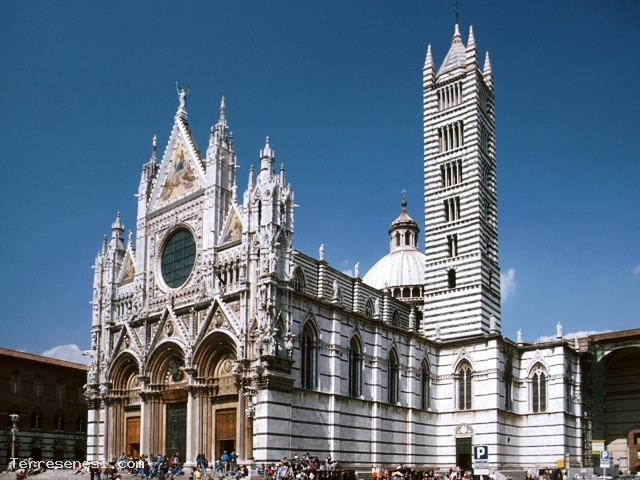
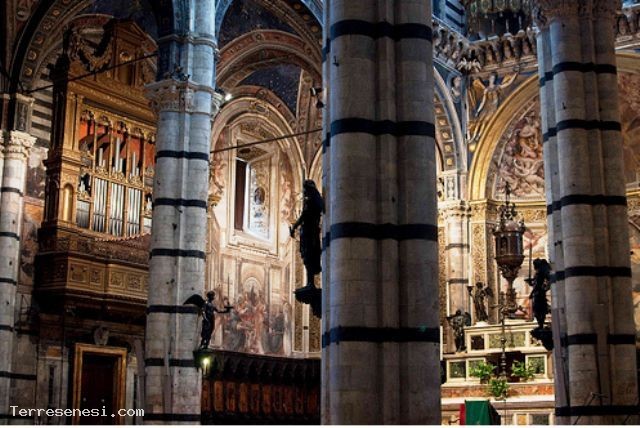
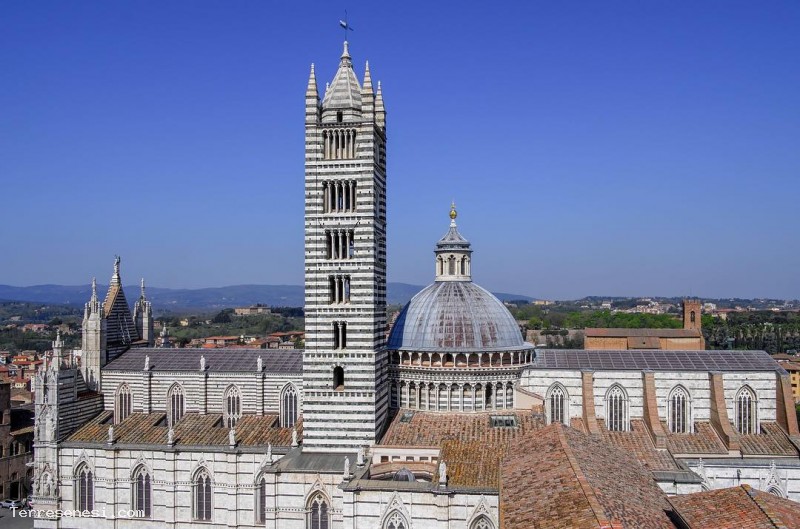
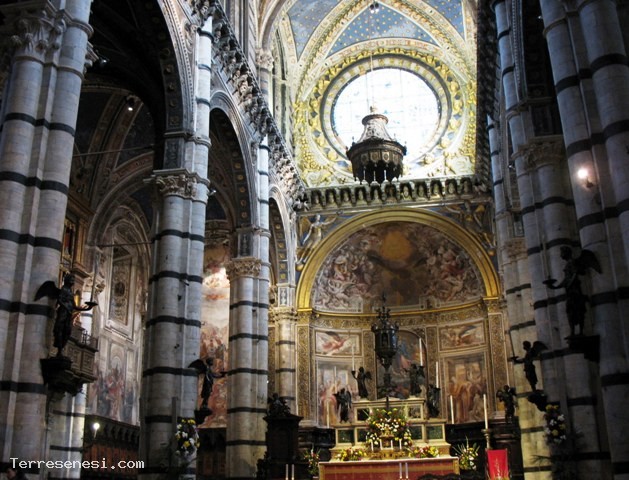
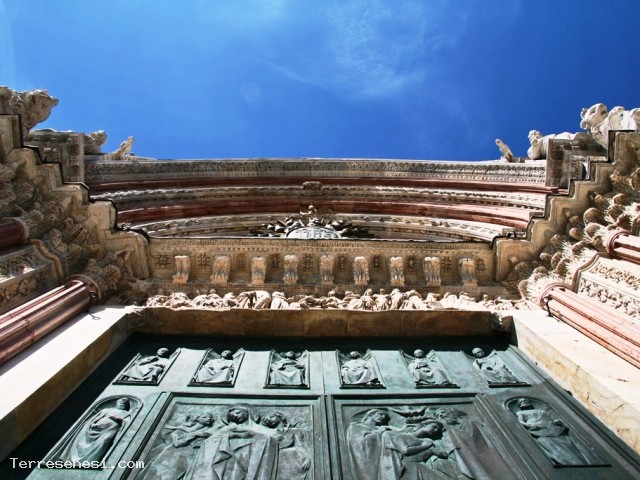
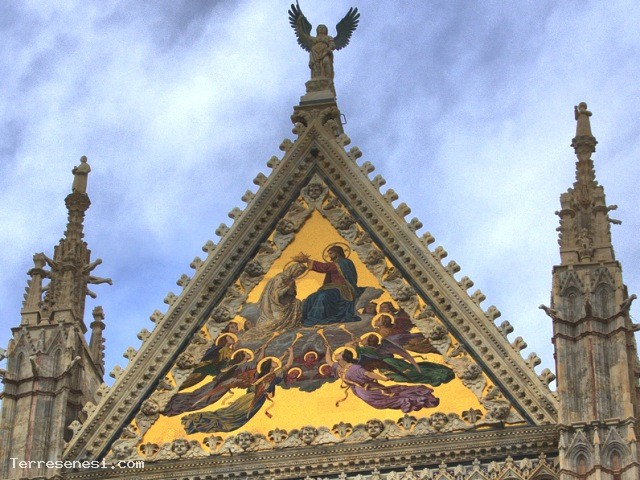
In the place where there is the cathedral, have been carried out excavations have brought to light a period of precedentecostruzione Lombards and Franks. In the twelfth century this church was incorporated in the construction of the Romanesque cathedral with its facade facing south towards the current "Facciatone" the unfinished "cathedral again." It seems that the cathedral was consecrated November 18, 1179. In fact, only in the thirteenth century, the church was converted into a basilica, with the new facade facing the hospital of Santa Maria della Scala. The work done terminrono only at the end of the next century and the dome was completed in 1263. The administration of the work was managed by the local canonical, but from 1258 to the beginning of the fourteenth century, was entrusted to the monks of the abbey of San Galgano for their skill as an administrator. Monks were to call Nicola Pisano and his son Giovanni. While John devoted himself to the front, using the bottom coverings marble from the quarries of Vallerano, the father carved the pulpit, ending it in 1268. In 1313 the tower was finished, about 77 meters high. With Siena at the height of its splendor, it must have seemed that the cathedral was still too small for the city, it was decided then to extend it in such a way that the current nave became only the transept and the façade were it to be oriented to the south. The project was entrusted to Peter Lando with the resolution of the Board of Bell August 23, 1339. Because of the plague of 1348 and some structural collapse in June of 1357 he decided to stop work. After a few years, the work was resumed, and in 1376, the construction of the upper part of the facade was entrusted to Giovanni di Cecco. Then, in 1382, were raised the vaults of the central nave leading to the completion of the cathedral.
Clicca qui per visualizzare filmato sul Duomo
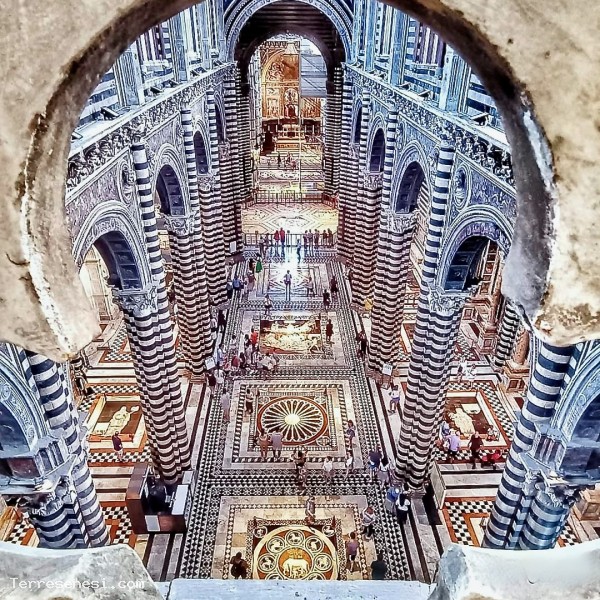
Clicca qui per visualizzare fimato sulle Tarsie del pavimento
STAY NEARBY
LA CASA DEL CONTE
SIENA
...I TERZI
SIENA
I nostri appartamenti si trovano nel centro storico di Siena, a due passi da Piazza del C...IL CHIOSTRO DEL CARMINE
SIENA
A Carmelite monastery was founded in 13 th century, the cloister of the Carmine is located...DINING & ENTERTAINMENT NEARBY
Teatro del Costone
SIENA
The Teatro del Costone, organized and managed by the cultural association “Usa&G...Buca Di S. Pietro
SIENA
Dal 2003 il risorante è stato acquisito dalla famiglia Lorenzoni, sotto la guida de...Teatro Dei Rozzi
SIENA
Non è da tutte le città avere due teatri bellissimi, perfettamente funzionan...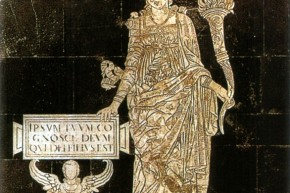
001 Tarsia pavimentale della navata destra - Sibilla Delfica
GIOVANNI DI STEFANO (1482)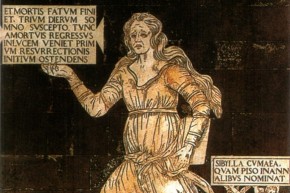
002 Tarsia pavimentale della navata destra - Sibilla Cumea
GIOVANNI DI STEFANO (1482)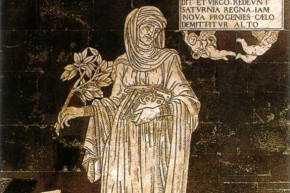
003 Tarsia pavimentale della navata destra - Sibilla Cumana
GIOVANNI DI STEFANO (1482)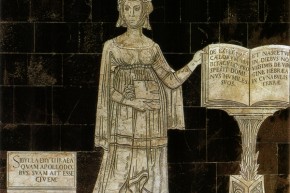
004 Tarsia pavimentale della navata destra - Sibilla Eritrea
ANTONIO FEDERIGHI (1482)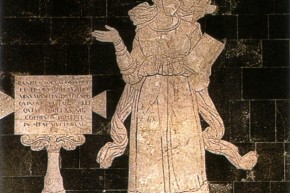
005 Tarsia pavimentale della navata destra - Sibilla Persica
BENVENUTO DI GIOVANNI (1483)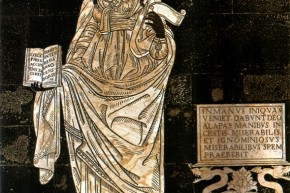
006 Tarsia pavimentale della navata sinistra - Sibilla Libica
GUIDOCCIO COZZARELLI (1483)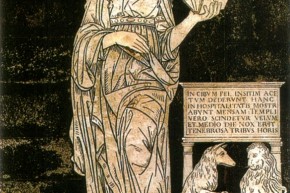
007 Tarsia pavimentale della navata sinistra - Sibilla Ellespontica
NEROCCIO DI BARTOLOMEO LANDI (1483)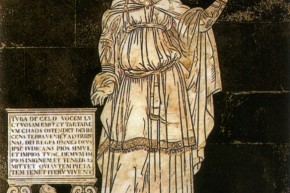
008 Tarsia pavimentale della navata sinistra - Sibilla Frigia
BENVENUTO DI GIOVANNI (1483)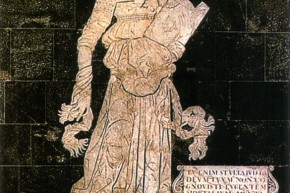
009 Tarsia pavimentale della navata sinistra - Sibilla Samia
MATTEO DI GIOVANNI (1483)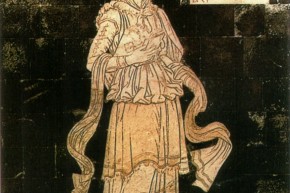
010 Tarsia pavimentale della navata sinistra - Sibilla Tiburtina
BENVENUTO DI GIOVANNI (1483)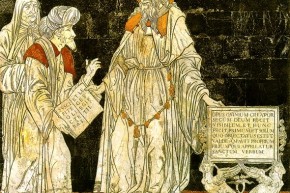
011 Tarsia pavimentale della navata centrale - Ermete Trismegisto
GIOVANNI DI STEFANO (1488)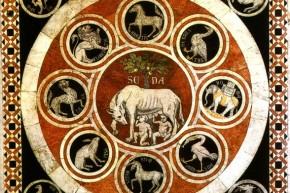
012 Tarsia pavim. della navata centrale - Lupa senese e simboli città alleate
(1373 e rifatto nel 1865)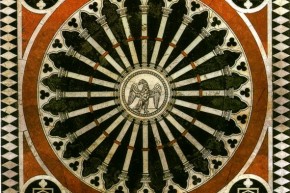
013 Tarsia pavimentale della navata centrale - L'aquila imperiale
(1374 e rifatto nel 1865)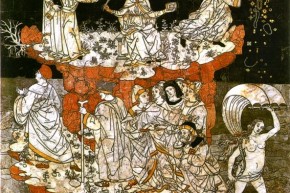
014 Tarsia pavim. della navata centrale - Allegoria del colle della sapienza
PINTURICCHIO (1505)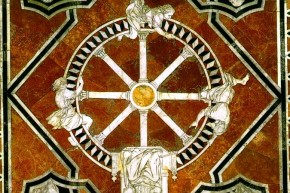
015 Tarsia pavimentale della navata centrale - Ruota della Fortuna
(1372)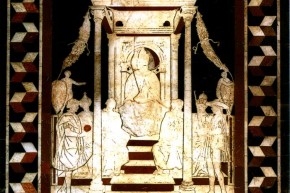
016 Tarsia pav. del Transetto destro - Imperatore Sigismondo coi suoi ministri
DOMENICO DI BARTOLO (1434)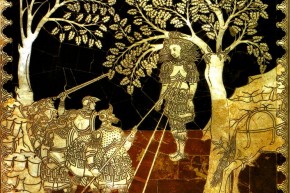
017 Tarsia pavimentale del Transetto destro - Morte di Assalonne
(1447)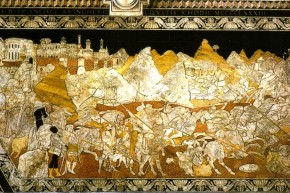
018 Tarsia pavimentale del Transetto destro - Sacrificio di Iefte
NEROCCIO DI BARTOLOMEO LANDI (1481-1485)
019 Tarsia pavimentale del Transetto destro - Sette età dell'uomo
ANTONIO FEDERIGHI (1475)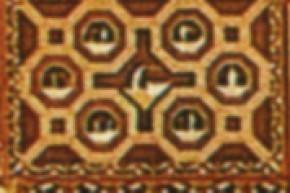
020 Tarsia pavimentale del Transetto destro - Religione e tre Virtù teologali
ANTONIO FEDERIGHI (1870)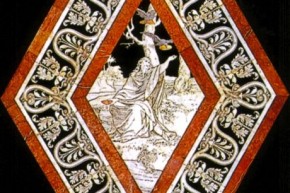
021 Tarsia pavimentale dell'Esagono centrale - Elia nutrito dai corvi nel deserto
ALESSANDRO FRANCHI (1878)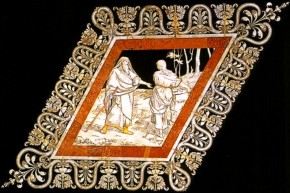
022 Tarsia pavimentale dell'Esagono centrale - Elia incontra la vedova nel bosco
ALESSANDRO FRANCHI (1878).jpg)
023 Tarsia pavimentale dell'Esagono centrale - Elia resuscita il figlio della vedova
ALESSANDRO FRANCHI (1878)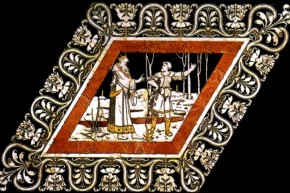
024 Tarsia pavimentale dell'Esagono centrale - Elia ordina ad Abdia di recargli Acab
DOMENICO BECCAFUMI (1519-1524)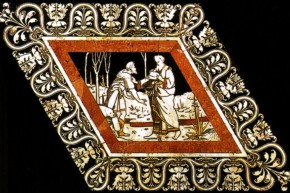
025 Tarsia pavimentale dell'Esagono centrale - Abdia reca ad Acab il messaggio di Elia
DOMENICO BECCAFUMI (1519-1524)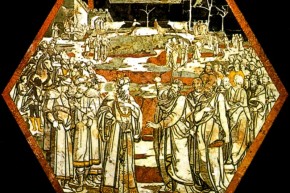
026 Tarsia pavimentale dell'Esagono centrale - Patto tra Elia e Acab
DOMENICO BECCAFUMI (1524)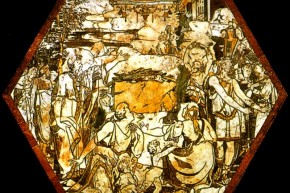
027 Tarsia pavimentale dell'Esagono centrale - Sacrificio dei sacerdoti di Baal
DOMENICO BECCAFUMI (1519-1524)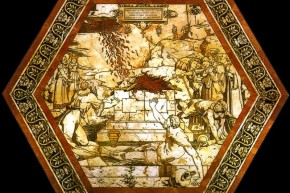
028 Tarsia pavimentale dell'Esagono centrale - Sacrificio di Elia
DOMENICO BECCAFUMI (1519-1524)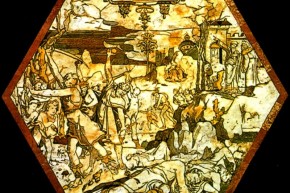
029 Tarsia pavimentale dell'Esagono centrale - Uccisione dei profeti di Baal
DOMENICO BECCAFUMI (1519-1524)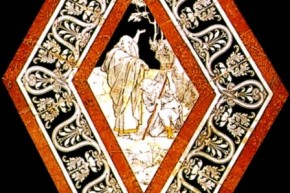
030 Tarsia pavimentale dell'Esagono centrale - Elia unge Iehu re d'Israele
ALESSANDRO FRANCHI (1878)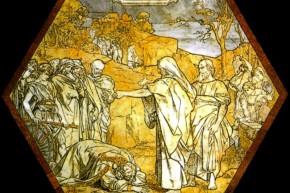
031 Tarsia pavimentale dell'Esagono centrale - Elia predice la morte di Acab
ALESSANDRO FRANCHI (1878)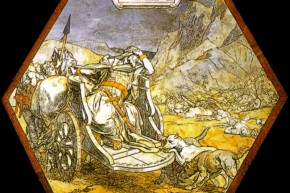
032 Tarsia pavimentale dell'Esagono centrale - Acab mortalmente ferito in battaglia
ALESSANDRO FRANCHI (1878)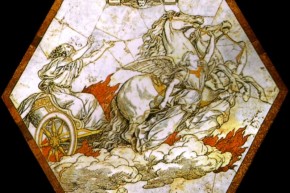
033 Tarsia pavimentale dell'Esagono centrale - Elia rapito in cielo dal carro di fuoco
ALESSANDRO FRANCHI (1878)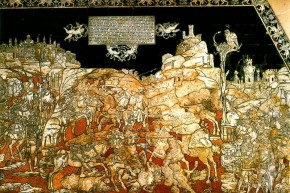
034 Tarsia pavimentale del Transetto sinistro - Cacciata di Erode
BENVENUTO DI GIOVANNI (1485)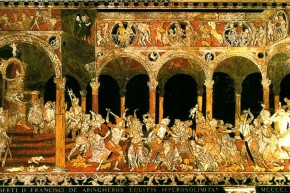
035 Tarsia pavimentale del Transetto sinistro - Strage degli innocenti
MATTEO DI GIOVANNI (1481-1482)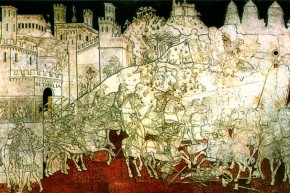
036 Tarsia pavimentale del Transetto sinistro - Storia di Giuditta
FRANCESCO DI GIORGIO MARTINI (1473)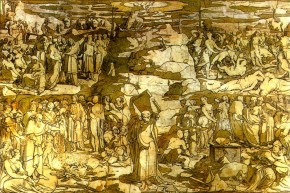
037 Tarsia pavim. riquadro sopra l'esagono - Storia di Mosè sul Sinai
DOMENICO DI NICCOLò DEI CORI (1531)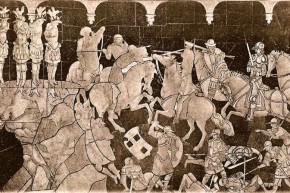
039 Tarsia pav. del Presbiterio e Coro - Giosuè che vince gli Amorrei
SASSETTA (1426)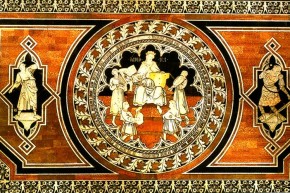
040 Tarsia pav. del Presbiterio e Coro - Storie di Davide
DOMENICO DI NICCOLò DEI CORI (1423)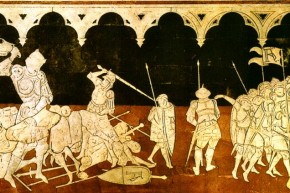
041 Tarsia pav. del Presbiterio e Coro - Storia di Sansone
SASSETTA (1426 circa)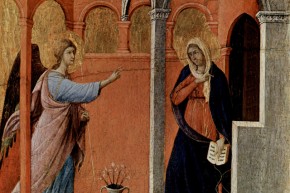
Annunciazione
DUCCIO DI BUONINSEGNA (1308-1311).jpeg)
Compianto sul Cristo morto e Santi
IL RUSTICHINO (1622 - 1626)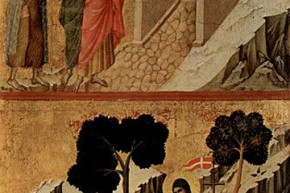
Cristo e i pellegrini verso Emmaus e L'Apparizione di Cristo alla Maddalena
DUCCIO DI BUONINSEGNA (1308-11)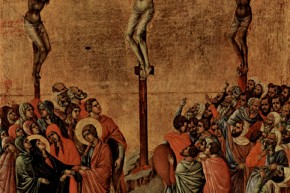
Crocefissione
DUCCIO DI BUONINSEGNA (1308-11)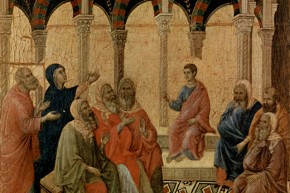
Disputa nel tempio
DUCCIO DI BUONINSEGNA (1308-1311)
Il lato anteriore della Maestà
DUCCIO DI BUONINSEGNA (1308)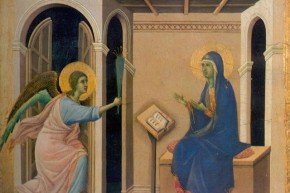
L'Annunzio della morte alla Vergine
DUCCIO DI BUONINSEGNA (1308-11)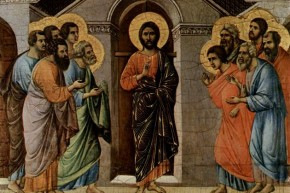
L'Apparizione di Cristo agli apostoli a porte chiuse
DUCCIO DI BUONINSEGNA (1308-11)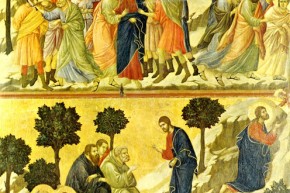
La cattura di Cristo e la preghiera nell'orto
DUCCIO DI BUONINSEGNA (1308-11)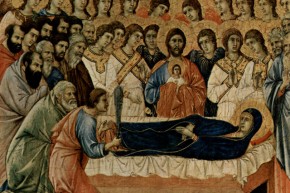
La morte della Vergine
DUCCIO DI BUONINSEGNA (1308)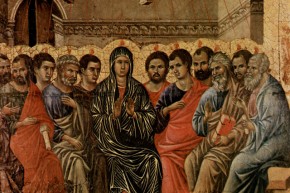
La Pentecoste
DUCCIO DI BUONINSEGNA (1308-11)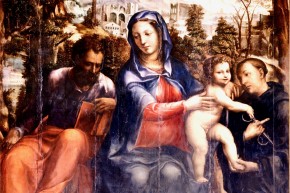
La Sacra famiglia con San Leonardo
SODOMA (1530 circa)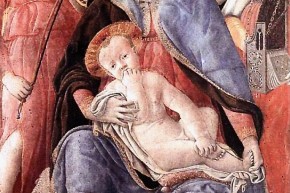
Madonna dell'umiltà
DOMENICO DI BARTOLO (1433)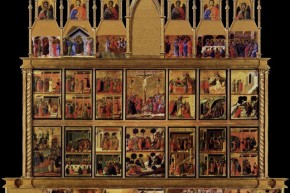
Maestà del Duomo di Siena
DUCCIO DI BUONINSEGNA (novembre 1308).jpeg)
Simbolo dell'evangelista Matteo
URBANO DA CORTONA (1452)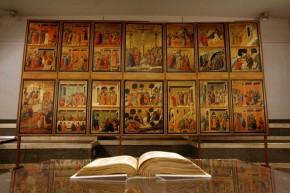
Storie della Passione
DUCCIO DI BUONINSEGNA (1308)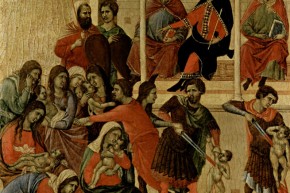
Strage degli innocenti
DUCCIO DI BUONINSEGNA (1308-1311)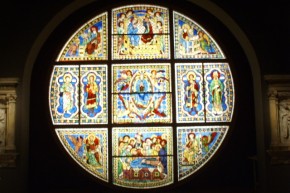
Vetrata
DUCCIO DI BUONINSEGNA (1360-65)